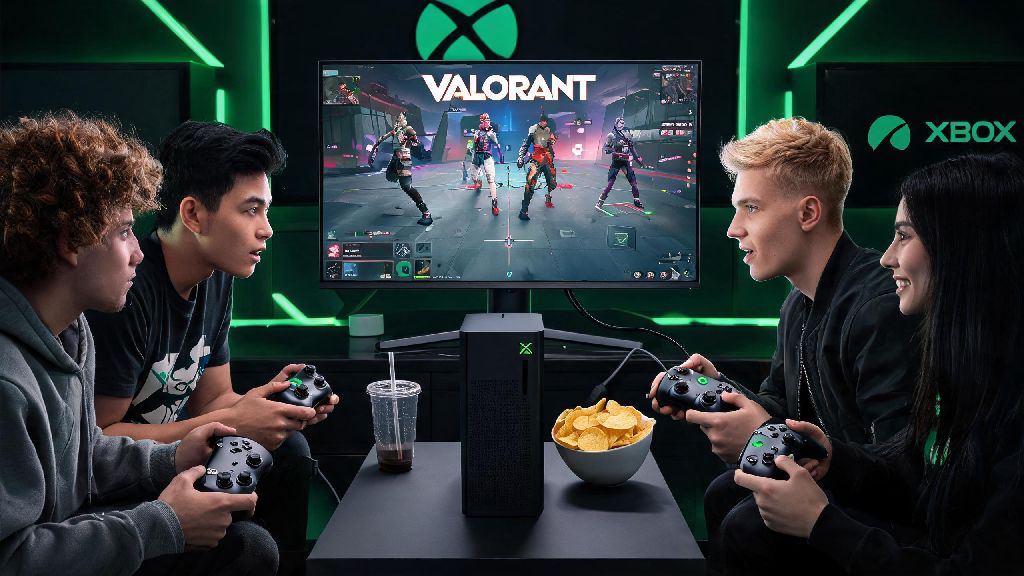
If you’re someone who switches between console first-person shooters and PC games all the time, you’ve probably wondered can you play controller on Valorant PC at least once. I’ve been there too, after grinding 10+ hours of Apex Legends on my Xbox over a weekend, I didn’t feel like forcing my hands to adjust back to mouse and keyboard for a quick Valorant unrated match with friends. So I spent a full week testing every part of controller support for Valorant on PC, from setup to ranked performance, to figure out exactly how well it works, who it’s for, and what limitations you need to know about before you plug in your controller. We’ll cover everything from official support policies to step-by-step setup tips, what aim assist you actually get, whether it’s worth using for ranked play, and common issues you might run into along the way.
Can You Play Controller on Valorant PC? Official Support Details
Riot has offered official controller support for Valorant on PC since 2023, so you don’t have to mess with third-party key mapping tools to get your controller working. That said, it’s not a plug-and-play experience for every controller, and some features you might expect from console FPS games are missing entirely. I tested this with three common controllers: an Xbox Series X controller, a DualSense PS5 controller, and a third-party 8BitDo Pro 2. All of them connected without extra software when plugged in via USB, but Bluetooth connections had spotty performance for the DualSense specifically, with occasional input lag that made fast duels almost impossible to win.
You won’t get any haptic feedback or adaptive trigger support for Valorant on PC, even if you use a DualSense controller, since Riot hasn’t built those features into the PC version yet. Third-party key mappers like reWASD do work with Valorant, but Riot has explicitly stated that using these tools to add macro inputs, modified aim assist, or other unfair advantages is against the game’s Terms of Service, and can result in a permanent account ban. Stick to the official built-in controller support to avoid risking your account, even if you see other players online recommending third-party tools for extra features.
Step-by-Step Controller Setup for Valorant PC
Setting up your controller only takes a few minutes, even if you’ve never adjusted your input settings before. One common question I get from new controller users is if there’s any extra software needed to make controller work on Valorant PC, and the answer is no, as long as you have an official Xbox or PlayStation controller. First, plug your controller into your PC via USB, or pair it over Bluetooth if you prefer wireless (I’d recommend USB for competitive play, since it has more consistent input latency). Open Valorant, then head to the settings menu, and navigate to the Controls tab. You’ll see a toggle at the top of the page to switch between Mouse/Keyboard and Controller input. Toggle that on, and you’ll be able to customize every button mapping to fit your playstyle.
I’d recommend adjusting a few settings before you jump into a match to avoid frustration, since the default controller layout and sensitivity are not optimized for most players:
- Set your deadzone to between 5% and 10% to avoid unintended stick drift, but don’t turn it up too high or you’ll lose precision for small aim adjustments when you’re trying to line up long-range shots
- Lower your horizontal and vertical sensitivity to 0.4 to 0.6 if you’re used to console FPS settings, since Valorant’s default controller sensitivity is far higher than most similar games, which will make your aim feel jittery at first
- Map your ability keys to the shoulder buttons or back paddles if your controller has them, since trying to hit face buttons while aiming will throw off your shot and make you lose duels you should win
Make sure you test all your button mappings in the practice range first before you join a real match, because the default layout swaps jump and crouch compared to most console FPS titles, which can throw you off if you don’t fix it first. I also found that turning off vibration entirely reduced input lag by a small but noticeable amount, especially when using a wireless Bluetooth connection. If you notice stick drift after a few weeks of playing, you can slightly increase your deadzone to compensate, but you’ll be better off fixing the drift itself or replacing your controller if you play regularly.
Aim Assist for Controller on Valorant PC: What You Actually Get
A lot of players assume Valorant has the same strong aim assist as games like Call of Duty or Halo, but that’s not the case at all. Riot built Valorant as a tactical shooter first, so the aim assist is intentionally very weak to keep the playing field fair between controller and mouse and keyboard users. I tested this across 20+ unrated and ranked matches, and the difference between aim assist on and off is almost unnoticeable for most playstyles, unless you’re fighting at very close range.
The only aim assist you’ll get is slowdown when your crosshair is very close to an enemy player, there’s no aim snap or rotational aim assist at all. That means you still have to track targets manually, just like you would with a mouse, you just get a small help to keep your crosshair from sliding past a player when you’re aiming close to them. It only really helps for close-range fights with SMGs or shotguns, it won’t help you land long-range Vandal or Operator shots at all. Riot has tweaked the aim assist strength a few times over the past year, but they’ve repeatedly said they have no plans to add rotational aim assist or aim snap, since they don’t want controller users to have an advantage over mouse and keyboard players. If you’re switching to controller hoping for a free aim advantage, you’re going to be disappointed.
Pros and Cons of Using Controller for Valorant PC
For most players, mouse and keyboard is still the best option for Valorant, but controller has a few specific use cases where it’s a better pick. Let’s start with the benefits. First, it’s far more comfortable for casual play, especially if you’re sitting on a couch instead of at a desk. It’s also a lot easier to pick up if you’re new to PC gaming and have years of experience with console FPS titles. I’ve found that it’s great for quick unrated matches with friends who play on console too, since I don’t have to adjust my muscle memory between games. You also don’t have to worry about hand cramping as much with a controller, which is a big plus if you play for multiple hours at a time.
But there are some big downsides that make it a bad pick for ranked play above Platinum rank. The biggest one is that you’ll struggle to make fast, precise flicks that are required for long-range fights or Operator picks. You also can’t adjust your crosshair placement as quickly as a mouse and keyboard player, which puts you at a huge disadvantage in pre-aim duels where both players are peeking a corner at the same time. Another downside is that you can’t bind as many actions to a controller as you can to a keyboard, so you might have to sacrifice some quick actions like switching to your knife faster or pinging enemies quickly if you don’t have a controller with back paddles.
I found that I could hold my own in Gold and Platinum ranked lobbies with a controller, with a roughly 50% win rate across 15 ranked matches. But as soon as I hit Ascendant, I was losing almost every duel to mouse and keyboard players who could flick faster and aim more precisely than I could, even after adjusting my settings for a full week to get used to the controller. If you only play Valorant for casual fun and don’t care about climbing the ranked ladder, controller is a perfectly valid option. But if you want to hit Immortal or Radiant rank, you’re going to have a much harder time getting there with a controller than you would with a mouse and keyboard.
At the end of the day, the answer to can you play controller on Valorant PC is a clear yes, but it’s not the right pick for every player. Take some time to test it out in the practice range and a few unrated matches to see if it fits your playstyle, and don’t be afraid to adjust your settings until it feels comfortable. If you’re serious about climbing the ranked ladder, you’ll probably want to stick to mouse and keyboard long term, but there’s no shame in using a controller for casual play when you just want to relax and have fun with friends. You don’t have to force yourself to use an input method you hate just because it’s the meta.