You’ve got 45 minutes free before you need to head out for dinner, and you’re debating queuing up for a Valorant match. The last thing you want is to get stuck mid-game and have to AFK, letting your whole team down. That’s why so many players ask how long does a Valorant game last before they hit that play button. As someone who’s grinded ranked for 3+ years and tested every mode Riot has released, I’ve broken down exactly what you can expect for match length across every mode, plus the variables that can make games run shorter or longer than average.
How Long Does a Valorant Game Last Across Official Play Modes?
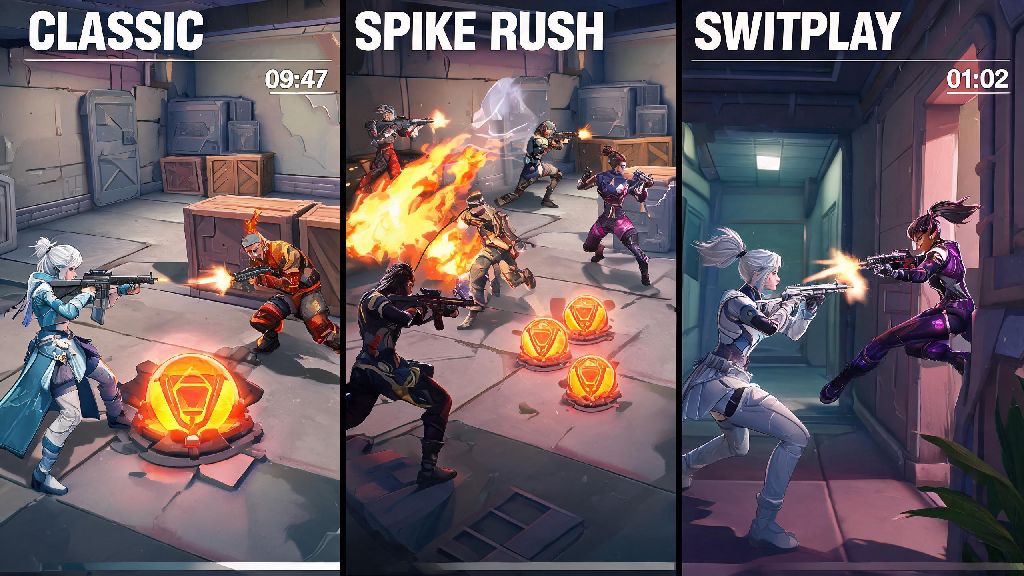
Every official Valorant matchmaking mode has a different average runtime, built to fit different play schedules and preferences. Swiftplay, the fastest 5v5 bomb mode, usually runs between 8 and 12 minutes total, with shorter round times and a lower win threshold than standard unrated or competitive play. Spike Rush, the older fast-paced mode, runs slightly longer at 8 to 15 minutes, with random weapon loadouts and fewer rounds per match.
Unrated matches, the standard casual 5v5 mode, run between 30 and 40 minutes on average, with 12 rounds per half and a 13-round win requirement. Competitive matches are the longest standard mode, running 10 to 15 minutes longer than casual unrated games on average, with the same round structure but longer average round times as players play more carefully to protect their rank.
Non-bomb modes are even shorter for quick practice sessions. Deathmatch runs 9 minutes flat, no exceptions, with no early end even if one player hits the kill cap early. Escalation and Team Deathmatch both run between 7 and 10 minutes, ending as soon as a team completes all weapon tiers or hits the kill threshold. For example, I once had an Escalation match wrap up in 6 minutes flat when my squad rolled through the weapon tiers without dropping a single round.
Key Factors That Can Extend or Shorten Your Valorant Match
Average runtimes are just a baseline, and a lot of variables can make your match finish far faster or slower than expected. The biggest factor is how evenly matched the two teams are. A lopsided 13-0 sweep will end far earlier than a 13-12 nailbiter that goes to the final round of the second half. Overtime is the single biggest factor that can make a competitive Valorant game run far past its average runtime, as teams have to win by two rounds to take the match.
Other small factors add up too. Each team gets two 30-second timeouts per half, so if both teams use all their timeouts, that adds two full minutes to the match total. AFK disconnects and pause requests can also add extra time, especially if a player needs to reconnect mid-match. Remake votes, triggered if a player disconnects in the first two rounds, end a match almost immediately with no rank penalty for remaining players.
I learned this the hard way last year when I queued for a ranked match 45 minutes before I had to catch a bus. The game went to four overtime rounds, and I ended up having to leave halfway through, costing my team the win and landing me a 2 hour queue ban. I never make that mistake now, and always account for overtime when I plan my play sessions.
What to Consider When Planning Your Valorant Play Session
Picking the right mode for your available time is the easiest way to avoid stress and penalties. If you have less than 20 minutes free, stick to Deathmatch, Escalation or Swiftplay. These modes have hard time caps or very short average runtimes, so you won’t get stuck mid-match when you need to leave. Always add 15 minutes of buffer time to your planned play window if you’re queuing for competitive ranked matches, just in case you end up in an overtime fight.
Don’t forget to account for queue time too. If you’re playing solo in a low-pop rank or region, queue times for competitive can be 5 to 10 minutes on top of match runtime. If you’re queuing with a full stack of players across a wide rank range, queue times can be even longer as the matchmaker struggles to find a balanced lobby. Leaving a ranked match early can result in a 1 hour to 7 day queue ban, depending on how many times you’ve AFKed before, so it’s never worth queuing for ranked if you don’t have enough time to finish the full match.
So if you’re squeezing in a game between work meetings or before a family event, stick to deathmatch or Swiftplay. You won’t have to worry about getting stuck in a long match, and you can still get in some practice with your favorite agents. If you’ve got a full hour free, you can comfortably queue for ranked without worrying about having to leave early.
Common Misconceptions About Valorant Game Length
There are a lot of myths floating around about how long Valorant matches can run, especially among new players. One of the most common myths is that ranked matches always take at least 45 minutes. That’s not true at all—if your team sweeps the enemy 13-0, you can finish a ranked match in as little as 25 minutes, well under the average runtime. Another myth is that Spike Rush always takes 10 minutes or less; if both teams are evenly matched, it can easily run to 15 minutes, plus queue time on top.
A lot of players also assume overtime can go on forever, but that’s no longer the case. Riot added an overtime cap a few years back, so after four tied overtime rounds, the match goes to a single sudden death round to decide the winner. There is a hard cap on overtime rounds to prevent matches from dragging on for hours, which is a common point of confusion for new players. This rule only applies to official matchmaking, though—custom games can turn off the overtime cap if you want to play for fun with friends.
Another common misconception is that queue time counts toward match length, but that’s separate. You can always cancel your queue if you run out of time before a match is found, with no penalties at all. Only once you’ve accepted the match and loaded into the agent select screen are you locked in for the full duration.
At the end of the day, how long does a Valorant game last depends almost entirely on what mode you’re playing and how evenly matched your team is against your opponents. If you’re short on time, stick to faster casual modes to avoid interruptions and penalties. If you’ve got a full hour free, queuing for ranked is totally safe, even if you end up in a tight overtime fight. Next time you’re getting ready to log on, use this breakdown to pick the right mode for your schedule, so you can enjoy your play session without stress.