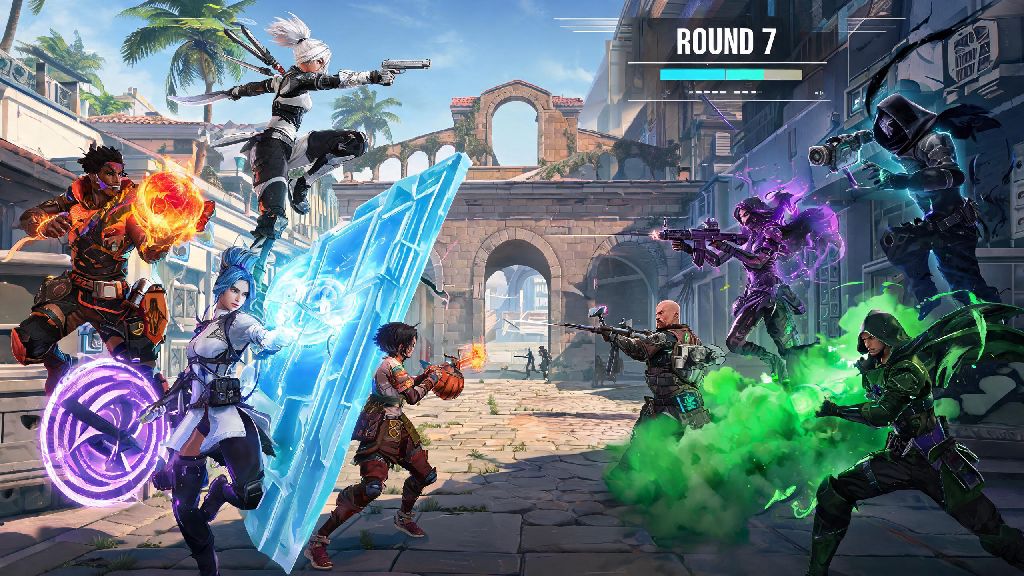
If you’ve ever found yourself checking the clock mid-match wondering if you have time to squeeze in one more queue before dinner, you’ve probably asked how many rounds in Valorant you’re actually signing up for. Unlike some other tactical shooters that have fixed match lengths across all modes, Riot’s 5v5 shooter adjusts round counts, overtime rules, and win conditions based on what queue you’re playing. I’ve spent over 300 hours in both casual and ranked lobbies over the last two years, and I’ve lost count of how many times I thought a match was wrapping up just to hit a 4-round overtime drag. This guide breaks down exact round counts for every game mode, plus edge cases that can make matches shorter or longer than you expect.
How Many Rounds in Valorant Standard Play (Unrated & Competitive)
If you’re new to the game and asking how many rounds in Valorant standard queues run, this variable length is the biggest thing to keep in mind. Both unrated and competitive queues use the same core structure built around side swaps and win-based match ends, rather than a fixed total round count. Standard matches are played to 13 wins, with no fixed total round count unless you hit overtime.
The first half of a standard match runs for 12 rounds total, with each team playing 6 rounds on attack and 6 on defense before swapping sides. If one team hits 13 wins before all 24 possible regulation rounds are played, the match ends immediately. That means a one-sided sweep can end in as few as 13 rounds, while a close 12-12 tie will go to overtime.
Riot updated overtime rules in 2023 to remove the former maximum overtime cap for competitive play, so matches can technically go on indefinitely until one team pulls ahead by two clear wins. Most overtime matches wrap up within 2-3 two-round sets, though some go much longer. You can vote to surrender after 8 rounds in unrated, and after 16 rounds in competitive, which will end the match early regardless of round count.
Round Counts for Casual & Limited-Time Valorant Modes
For casual players who don’t want to commit to long matches, knowing how many rounds in Valorant casual modes run is key to picking the right queue. Most casual modes are built for fast, low-commitment play, with far lower maximum round counts than standard competitive or unrated lobbies. Spike Rush matches are only 7 rounds total, with first to 4 wins taking the game. Sides swap every two rounds in Spike Rush, so there’s no extended half-time break, making it perfect for 10-15 minute play sessions.
Swiftplay, the newer shortened standard mode, uses a 9-round maximum structure, with first to 5 wins taking the match. If teams are tied 4-4 after all 9 regulation rounds, a single sudden death round decides the winner, no extended overtime required. Limited-time modes like Replication or Snowball Fight usually follow either Spike Rush or Swiftplay round rules, though some event-specific modes have custom limits. Deathmatch, Team Deathmatch, and Escalation are all time-based, not round-based, so they run for a fixed 5-10 minutes regardless of kill counts.
Factors That Change Total Round Counts Mid-Match
A lot of new players assume matches will hit their maximum possible round count, but several common situations can make matches much shorter or longer than advertised. The most common one is surrender votes, which cut matches short if a majority of a team agrees to forfeit. You need 4 out of 5 votes to surrender in competitive, and 3 out of 5 in unrated, so it’s usually only used when a match is extremely one-sided. Early surrender is only available if a player leaves the match in the first 3 rounds, letting you end the game immediately without penalties for the remaining team.
If you’ve ever wondered how many rounds in Valorant can go on for, the answer is technically unlimited, as there’s no cap on overtime sets for ranked play. I once sat through a 8-set overtime match that ended at 21-19, totaling 40 rounds and nearly an hour and a half of play time, far longer than the average 30-40 minute competitive match. Technical issues can also cut matches short: if three or more players leave one team, the game will automatically end in a forfeit for that team, no matter what the current score or round count is.
Technical pauses for disconnected players don’t change the total round count, but they can extend the total time you spend in a match. If you’re on a tight schedule, it’s smart to avoid queuing for competitive if you see multiple players in your lobby with poor connection indicators, as they’re more likely to disconnect and cause delays or early forfeits.
How to Use Round Counts to Improve Your Valorant Strategy
Knowing how many rounds are left in a match isn’t just useful for planning your evening, it can also make you a much more effective player, especially in competitive lobbies. The biggest area this helps with is economy management: if you’re on round 11 and up 8-3, you can afford to force buy a round to try to close out the half early, instead of saving credits for the next round. If you’re down 11-12 in the final regulation round, you should always go all in on a full buy, because losing will send you to overtime, and saving credits will be useless if you lose the round anyway.
In overtime, every round counts as a full economic reset, so you don't have to worry about saving credits between rounds, you get a full buy every time. That means you can play as aggressively as you want in overtime, no need to hold back for future rounds. For casual modes like Spike Rush, knowing you only have 7 rounds total means you can take more risks than you would in standard play, since there’s no long-term economy to manage.
Round counts also help you pick the right agent for your playstyle based on the match state. If you’re on defense with only 2 rounds left in the half and you’re up by 3 rounds, you can pick a more aggressive agent like Jett or Raze to push for early picks, instead of a passive sentinel like Sage or Killjoy. If you’re down by 4 rounds with only 5 left to play, you can swap to a support agent like Omen or Brimstone to help your team execute coordinated site takes faster.
At the end of the day, the exact answer to how many rounds in Valorant you'll play depends entirely on the mode you queue for and how close the match is. Standard competitive and unrated matches can run anywhere from 13 to 40+ rounds if you hit extended overtime, while casual modes like Spike Rush wrap up in 7 rounds or less. Keep these counts in mind the next time you load up the game, and you'll never get stuck in a longer match than you have time for again. You’ll also be able to make smarter in-game decisions based on how many rounds you have left to turn a losing match around.