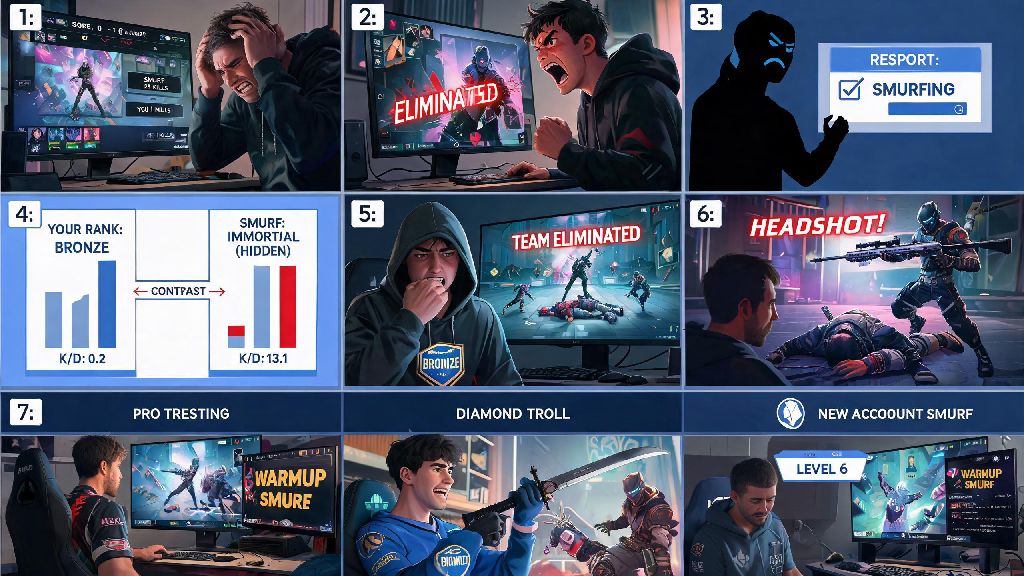
You’re queuing for a Silver competitive match, everything feels normal until one enemy Jett starts landing every headshot, moves like they’re supposed to be in Immortal rank, and single-handedly stomps your whole team. You report them for smurfing, but immediately wonder: is smurfing bannable in Valorant? I’ve spent the last four years climbing from Bronze to Immortal across three different accounts, and I’ve seen every type of smurf you can imagine: the pro player testing a new controller agent in Gold lobbies, the streamer making a new account to do a "Bronze to Radiant" challenge, and the petty Diamond player who makes an alt just to troll low-rank players after a bad loss on their main. Most players assume all smurfing is against the rules, but that’s not actually the case. Riot’s official terms of service draw a clear line between harmless alternate account use and smurfing that’s designed to ruin the game for others.
When Is Smurfing Bannable in Valorant?
Not all smurfing automatically qualifies for a ban, which is a point a lot of players get wrong. Riot doesn’t ban people just for owning or playing on an alternate account, even if that account is ranked lower than your main. The line gets crossed when you use that alternate account to intentionally disrupt matches for lower-skill players, or manipulate the ranked system for your own gain. Only smurfing paired with disruptive behavior leads to permanent or temporary bans.
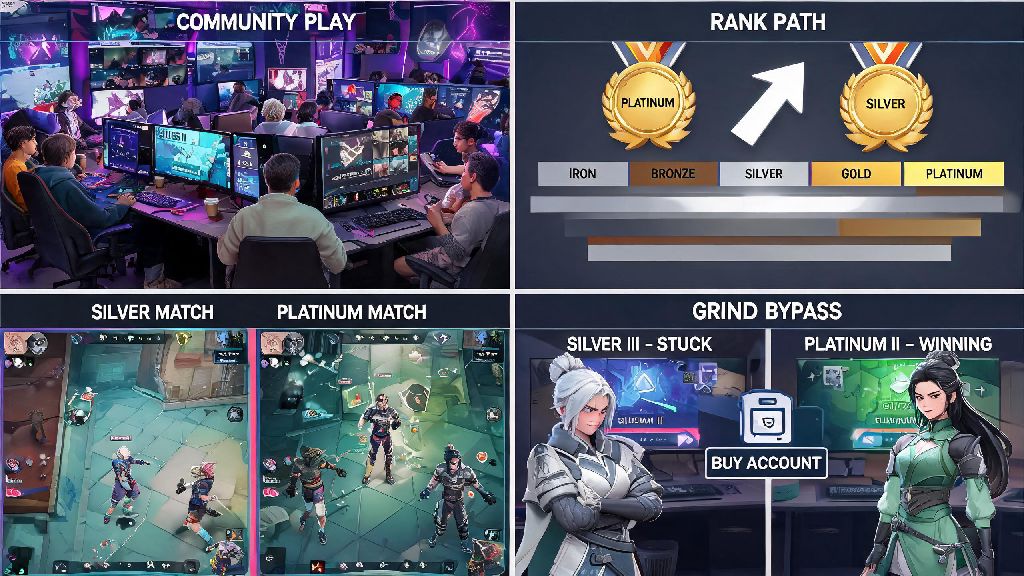
A lot of players get confused when they see popular streamers playing on low-rank alts without getting banned. The reason for that is simple: most of those streamers are not actively trying to ruin games for other players. They usually climb ranks extremely quickly, so they only spend a handful of matches in lower skill brackets before they’re matched against players of their actual skill level. The type of smurfing that gets you in trouble is the kind that involves intentionally staying in low rank to harass or stomp players who have no way of competing against you. For example, if you’re an Immortal player who intentionally loses 10 matches in a row to drop to Bronze so you can get 40 kills every game, that’s a clear violation of Riot’s terms of service, and you will get banned if the system catches you. Buying or selling low-rank accounts to use as smurfs is also an automatic ban offense, even if you don’t troll other players, because account trading violates Riot’s base terms of service.
How Riot Detects Smurfing That Violates Terms of Service
Riot’s detection system for disruptive smurfing is far more advanced than most players realize, and it works hand in hand with the Vanguard anti-cheat tool to flag high-risk accounts. Vanguard doesn’t just detect cheats — it tracks player performance patterns across every match you play, including headshot percentage, movement accuracy, utility use efficiency, win rate spikes, and how fast you climb ranks. If a player is winning 90% of their Bronze matches with a 60% headshot rate, the system flags them immediately for closer review.
Player reports also play a huge role in catching disruptive smurfs. If 10+ players report the same account for smurfing and trolling in a 24-hour window, the system prioritizes reviewing that account, often within a few hours of the reports being submitted. Riot also uses automatic MMR adjustments for accounts that show clear signs of being played by someone far above their current rank, so most smurfs get pushed up to their actual skill bracket within 2 to 3 matches. It’s only when players intentionally work around this MMR adjustment that they face penalties. The most common behaviors that get smurf accounts flagged for bans include:
I once reported a smurf in my Silver lobby who was getting 35+ kills every game and typing toxic messages in chat every time he got a kill. I got an in-game notification less than 24 hours later telling me the account had been issued a 2-week competitive ban. That’s how fast the review process can be when there’s clear evidence of disruptive smurfing.
What Penalties Do You Get For Bannable Smurfing?
Riot uses a tiered penalty system for smurfing-related violations, depending on the severity of the offense and whether you have a history of breaking terms of service. Minor first offenses usually get a 72-hour competitive queue ban, with an official warning sent to your registered email. This is common for players who didn’t realize intentional MMR manipulation is against the rules, and haven’t engaged in extreme toxic behavior alongside their smurfing.
Repeated offenses lead to longer bans, starting at 1 week, moving up to 1 month, and eventually a permanent account ban. If you’re caught buying or selling smurf accounts, that’s an immediate permanent ban, no warning, no appeal in almost all cases. A lot of players think they can get away with smurfing by making a new account with a different email, but Riot’s systems track a lot more than just your email address. They can link accounts through hardware IDs, IP addresses, and even play style patterns. That means if you get banned on a smurf account, there’s a real chance your main account could get flagged too, especially if you have a history of toxic behavior or TOS violations. Permanent bans for smurfing-related violations can’t be appealed unless you can prove your account was hacked, so it’s not worth risking years of progress and hundreds of dollars worth of skins on your main for a few stomp games in Bronze.
What To Do If You Run Into a Smurf in Your Valorant Matches
Running into a smurf can be incredibly frustrating, especially if you’re in the middle of a rank up game, but reacting the wrong way can lead to you getting penalized instead of the smurf. The first rule is don’t tilt, don’t type angry messages in chat, and don’t team kill or throw the match to get back at them. All of these behaviors will get you reported by your own teammates, and you could end up with a chat restriction or competitive ban of your own.
Instead, submit a report through the in-game reporting tool immediately after the match, select the "unfair play" or "griefing" category, and add a short note explaining that the player is clearly smurfing and intentionally ruining the match for lower-rank players. You don’t need to spam reports across multiple platforms, one clear in-game report is enough to flag the account for review. If the match is clearly one-sided, you can surrender early to save time, there’s no shame in cutting your losses and moving on to the next game. I’ve run into dozens of smurfs over the years, and 90% of them are gone from my rank bracket within 48 hours, so it’s rarely worth getting upset over one bad match. You can even use the game as a chance to practice against a higher-skill player, and take notes on their positioning or utility use to improve your own gameplay.
At the end of the day, the answer to whether is smurfing bannable in Valorant depends entirely on how you use your alternate account. If you’re just making an alt to practice new agents or play with friends who are new to the game without throwing your main rank, you have nothing to worry about. If you’re making an alt to troll, stomp low-rank players, or manipulate the ranked system, you’re almost certainly going to face a penalty eventually. Valorant is meant to be a fair competitive experience for players of all skill levels, and following the rules ensures everyone gets to enjoy the game the way it’s intended.