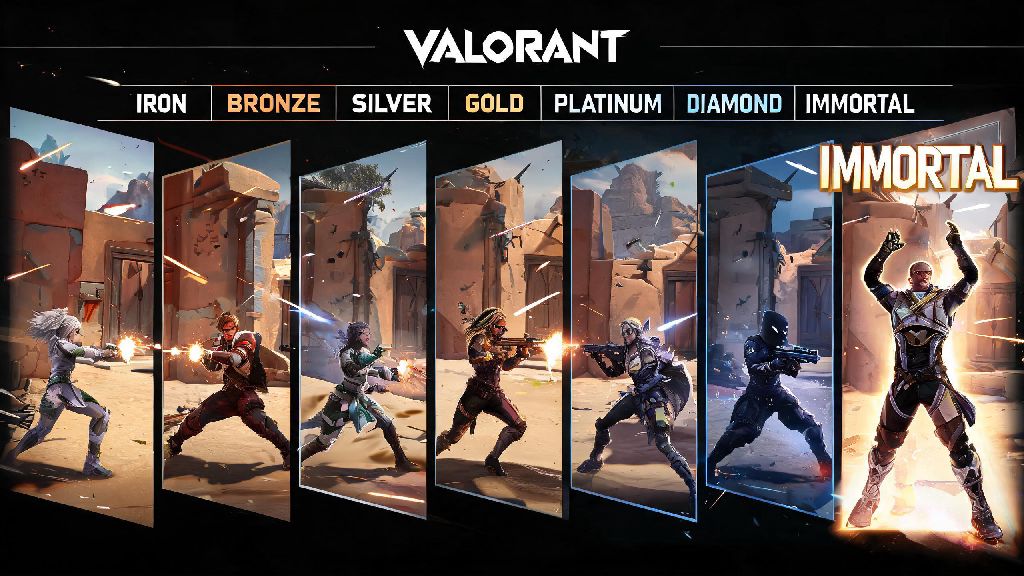
2026 has brought a ton of new players to Valorant, thanks to the launch of the game’s new mobile cross-play feature and a wildly popular international championship that broke viewership records earlier this year. If you’re one of those new players, or a returning player who hasn’t touched competitive mode in a few years, you’re probably asking what are the ranks in Valorant and how the system works right now. I’ve been grinding Valorant competitive since 2023, hitting Immortal 2 in the final act of 2025, so I’ve seen every tweak Riot has made to the rank system over the years. This guide breaks down everything you need to know about 2026’s Valorant ranks, from the lowest tier to the highest, plus tips to climb faster without burning out.
What Are the Ranks in Valorant for 2026?
The core rank structure hasn’t changed drastically from previous years, but Riot made small adjustments to tier thresholds in 2026 to reduce overcrowding in mid-tier ranks like Platinum and Ascendant. There are 9 total rank tiers, with 3 sub-tiers per tier (except the highest rank, Radiant). Each sub-tier requires 100 Ranked Rating (RR) to move up to the next, and you lose RR for losses just like you gain it for wins. Unlike earlier iterations, 2026 ranks no longer have a placement match cap for returning players, so you can jump straight back into competitive even if you’ve been gone for a full year.
Below is the full list of 2026 Valorant ranks, plus the latest global rank distribution data released by Riot in January 2026:
Radiant is still limited to the top 500 players per region, regardless of how much RR you earn, so even if you hit 1000 RR as an Immortal 3, you won’t get Radiant unless you pass the 500th ranked player in your region’s RR count. That means Radiant spots are extremely competitive, especially in larger regions like North America and Europe.
How 2026 Valorant Rank Resets Work Per Act
Valorant runs 3 competitive acts per year, each lasting around 2 months, and your rank resets partially at the start of each new act. Riot made resets much softer in 2026, after years of player complaints about having to grind dozens of matches to get back to their true rank after every reset. Now, you will never drop more than 2 full tiers after a reset, even if you were at Immortal 3 the previous act.
You only need to play 3 placement matches in 2026 to get your starting rank for a new act, down from 5 in previous years. If you’re a brand new player who has never played competitive before, you will need to play 10 unrated matches first to unlock competitive mode, then 5 placement matches to get your first rank. For returning players, your MMR from the previous act carries over almost fully, so if you ended at Diamond 2 last act, you will place no lower than Platinum 1, even if you lose all 3 placement matches.
That said, the first two weeks of a new act tend to have more volatile matchups, as high rank players are still climbing back to their original tiers. If you’re a casual player who doesn’t want to run into Immortal smurfs in your Platinum lobbies, you might want to wait a week or two after an act launches to start playing competitive again. I usually take the first week of each act off to play unrated with friends, and I’ve noticed my win rate is 15% higher when I wait for ranks to settle.
Common Rank Misconceptions to Ignore in 2026
There’s a lot of bad advice floating around about Valorant’s rank system, and most of it is outdated or just plain wrong. Let’s bust some of the most common myths that players still believe in 2026. First, the biggest myth is that getting more kills always gives you more RR. That was true a few years ago, but Riot completely overhauled the performance rating system in 2025, and it’s even more team-focused now.
KDA only makes up 30% of your performance RR bonus in 2026, so supporting your team will get you higher gains than chasing frags. The system weights things like spike plants and defuses, first bloods, utility usage that leads to kills, and how many times you save your teammates with heals or smokes far more than how many kills you get. I once got 32 RR for a win where I only had 12 kills, but I had 18 assists, 8 spike plants, and 3 clutch defuses, so the system recognized I was a huge asset to the team.
Another common myth is that “Elo hell” is real and you can’t climb no matter how well you play. That’s simply not true in 2026. If you consistently perform above the average for your current rank, your hidden MMR will rise faster than your visible rank, and you’ll start getting 25-35 RR per win, and only losing 10-15 RR per loss. That means you can climb even if you only win 50% of your matches. If you feel stuck, it’s almost always a sign that you need to work on a specific skill, not that the system is against you. If you want to learn more about how the 2026 MMR system calculates performance, check Riot's official competitive patch notes for full details.
Many players also think smurfing is still rampant in lower ranks, but Riot rolled out new AI-powered smurf detection in 2026 that flags high-skill new accounts within 3 matches. Smurfs are now moved to their correct rank 70% faster than they were in 2025, so lower rank lobbies are far more balanced than they used to be. You will never be penalized for a teammate leaving a match early in 2026, as long as you stay until the end or the game is officially forfeit, so you don’t have to worry about losing RR because someone rage quit.
Actionable Tips to Climb Valorant Ranks Faster in 2026
Climbing ranks doesn’t have to be a grind that takes 4 hours a day, as long as you play smart instead of just playing a lot. I went from Silver 3 to Immortal 2 over 2 years, and these are the tips that made the biggest difference for my climb. First, stick to a small pool of 2-3 agents per role, and don’t swap agents every match. Mastering a small pool lets you focus on improving your game sense instead of trying to remember ability cooldowns or lineups every time you queue up. I main Sova and Sage for almost all my matches, and that consistency cut my climb time from Platinum to Diamond in half.
Playing with a consistent team of 2-3 players will cut your climb time in half, as you avoid miscommunications with random teammates. You don’t need a full 5-stack, but having even one friend who you play with regularly means you can coordinate plays and cover each other’s weaknesses. I play with 2 friends I met in a Diamond lobby 2 years ago, and we have a 62% win rate when we queue together, compared to a 48% win rate when I play solo.
Don’t play competitive when you’re tilted, no matter how tempting it is to queue up again after a bad loss. If you lose 2 matches in a row, take a 20 minute break, walk around your house, drink some water, or play a quick ARAM match to reset your mood. I used to queue for 6 hours straight when I was on a losing streak, and I once dropped an entire tier in one night because I was making impulsive, angry decisions. Now I stop playing after 2 losses, and I almost never lose more than 50 RR in a single day.
Finally, track your matches to spot weak points you can work on. You don’t need to pay for a fancy tracking tool, just jot down what map you lost on, what role you were playing, and what caused the loss after every match. For example, if you notice you lose 70% of your matches on Bind’s defense side, you can practice holding sites and setting up utility for defense on Bind in custom matches. Small, targeted improvements will help you climb far faster than just grinding random matches every day.
Whether you’re a new player just figuring out what are the ranks in Valorant, or a returning player getting used to 2026’s softer resets and balanced MMR system, the core goal of the rank system is to match you with players of similar skill. Don’t get discouraged if you don’t climb as fast as you want to, even small improvements add up over time. I spent 6 months stuck in Gold before I finally broke through to Platinum, and that slow growth taught me more about the game than any fast climb ever could. Most importantly, have fun, and don’t let a number next to your name ruin your enjoyment of the game.